
Guardian Angels and Why We Love Them: Tracing Our Enduring Bond with Celestial Protectors
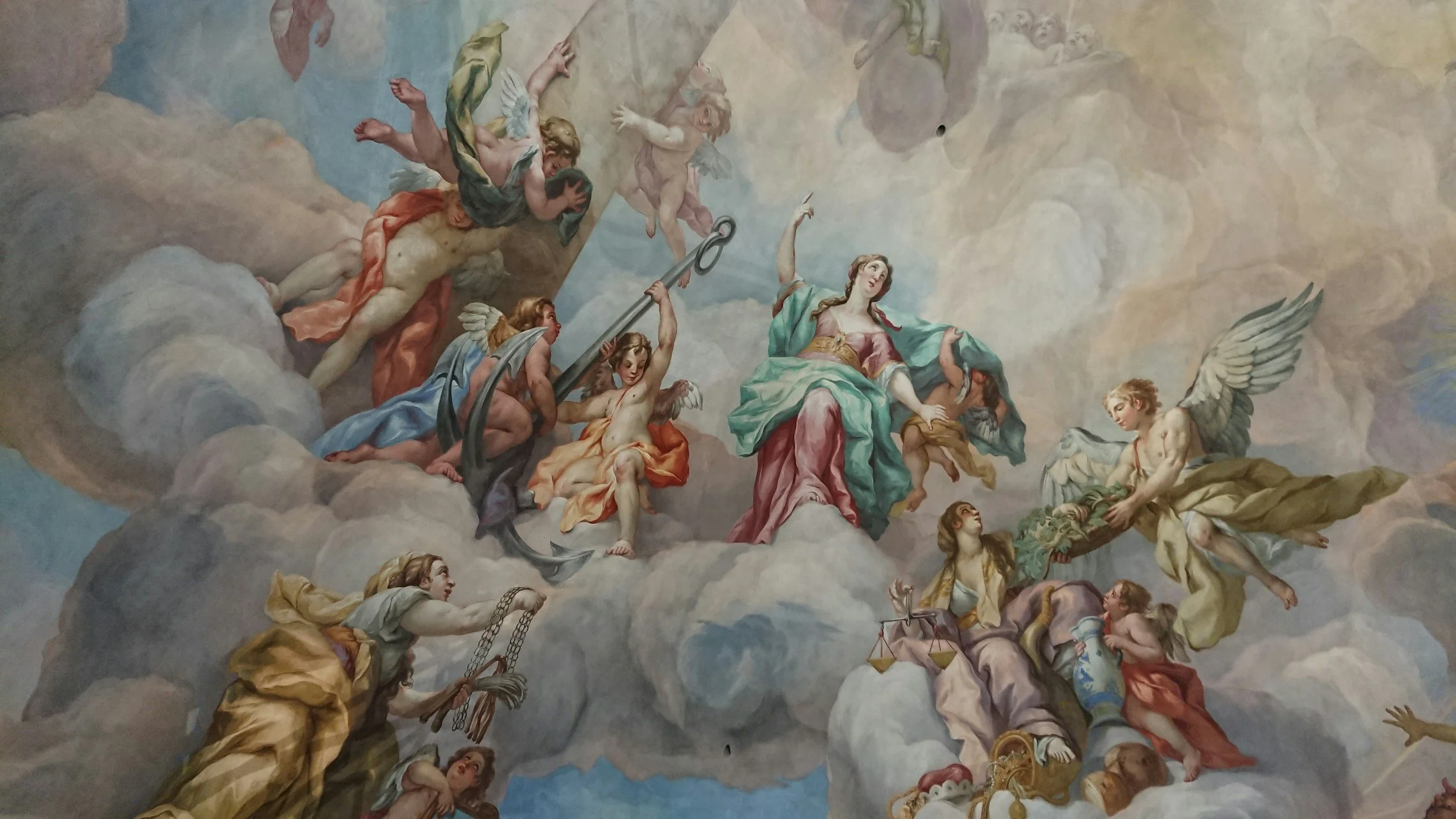
Roughly 70% of American adults believe in angels—a figure that, according to a 2023 study by The Associated Press and the NORC Center for Public Affairs Research, surpasses the number of people who believe in the devil or hell. Fascinatingly, angels have a broad appeal that crosses secular lines. Many people who reject organized religion and traditional theology entirely still believe in angels, proving the concept resonates far beyond regular churchgoers.
Guardian angels have outlasted countless theological concepts. They thrive in an age of scientific materialism when so much religious belief has faded. Why is that? Join me as I explore the enduring appeal of guardian angels. Let’s dive in.
When I think back to childhood, I can remember believing in guardian angels. I accepted their existence quite easily. It was just the way it was. Angels existed and they were meant to help me. I mostly heard about angels in a religious context and saw them in various paintings, usually ones with a child crossing a rickety bridge and angel hovering protectively over them.
That said, it never felt like I was experiencing Christian angels. To me, they existed outside the boundaries of any single tradition. Simply put, they always felt like majestic, divine presences meant to protect and guide me. That childhood intuition, it turns out, tracks with both human psychology and the archaeological record.
That intuitive sense that guardian angels belong to a lineage older than Christianity is supported by the archaeological record. Long before the Bible was written, or the formal rise of Judaism and Christianity, the human imagination was already populated by winged protectors.
On the walls of ancient Mesopotamian palaces (some dating back to the 10th century BCE) stood the lamassu: massive stone sentinels with human heads, the powerful bodies of bulls or lions, and towering feathered wings. Art historian Gunnar Berefelt documented how these beings served as sacred guardians, noting that “the wings symbolize the supernatural speed and nature” of divine protectors. The statues were positioned at thresholds to protect what was sacred and bridge the gap between earthly and divine realms.
Protective spirits are a universal thread in ancient spirituality. The Egyptians spoke of the ka, a vital life force created at birth that journeyed with the soul into the afterlife. For the Greeks, there were daimons, guiding intermediaries who bridged the gap between mortals and the divine. The Romans refined this further with the genius: a personal guardian and creative spark that attended every individual from their first breath to their last.
The ancient Zoroastrians crystallized the concept of the “guardian angel” around 600 BCE with the Fravashi. As religious scholar Mary Boyce explains, these guardian spirits originally “patrolled the boundaries of the ramparts of heaven,” but voluntarily descended to earth to protect individuals throughout their lives.
The enduring nature of this idea suggests it satisfies a deep, persistent need in human consciousness to feel accompanied and protected. And it spread. Religious historian David Albert Jones notes that the concept evolved as “Judaism encountered Persian religious ideas during and after the Babylonian exile,” absorbing and transforming the Fravashi concept into what would eventually become the biblical guardian angel.
Scripture is notably subtle regarding guardian angels; the specific phrase never actually appears in the text. Instead, the Bible offers a mosaic of scattered references including moments of sudden divine protection or angels dispatched for temporary, specific missions.
However, one verse became the foundational pillar for this belief. In Matthew 18:10, Jesus warns: “See that you do not despise one of these little ones, for I say to you that in heaven their angels always see the face of my Father who is in heaven.”
It was the early Church Fathers in the 3rd and 4th centuries (theologians like Origen and Jerome) who popularized the idea that every soul is assigned an angel at birth. By 1615, the Catholic Church had formalized the Feast of the Guardian Angels in the Roman calendar. But the concept really came alive through stories. And one story captured the imagination of Western culture for over a thousand years.
The Book of Tobit (likely written around 225-175 BCE) tells of a blind man named Tobit who sends his son Tobias on a dangerous 500-mile journey to reclaim a debt. Tobias hires a guide named Azariah to protect him on the road. They travel together, face dangers, catch a miraculous fish whose organs later heal both Tobias’s father and his future wife. Only at the end does Azariah reveal his true identity: he is the Archangel Raphael, sent by God to walk beside Tobias.
This story became wildly popular in Renaissance art. Painters like Titian and Perugino couldn’t stop depicting the scene: the young traveler, the angel companion, the small faithful dog, the fish. Why? Because it gave form to what people longed for. Not a distant God issuing commandments from heaven, but a protective presence walking the road beside you, looking exactly like a helpful stranger, making the journey less lonely and less dangerous.
That’s the image that stuck. The guardian angel as companion. As guide. As the one who’s been there all along, whether you knew it or not.
Angels feel accessible. Personal. They don’t demand we resolve the problem of evil or reconcile free will with omniscience or explain why suffering exists. They offer something simpler and more immediate: the possibility that we are seen, known, protected. That we matter enough to warrant a guardian.
Humans, from the dawn of self-awareness, have instinctively known their fragility. This unique consciousness (which allows us to dream of tomorrow) simultaneously exposes us to an acute awareness of all that could end us: predators, disease, the malevolence of others, and the cold indifference of the cosmos. In response, we imagined protection. Not just walls and weapons, but spiritual protection. Beings who watched over us, who cared about our survival, who stood between us and chaos. This wasn’t neurotic or irrational. It was profoundly human.
There’s a sociologist, Peter Berger, who had a phrase for this. In his 1969 book A Rumor of Angels, he wrote about how even as institutional religion declines, people continue to seek what he called “signals of transcendence”—moments and experiences that point beyond the merely material world. Guardian angels serve as one of these persistent signals. They give us the comfort of the divine without requiring us to work through all the difficulties of the divine.
Guardian angels haven’t stayed frozen in biblical form. They’ve shape-shifted dramatically across cultures and eras, revealing as much about us as about any celestial reality.
C.S. Lewis noticed this evolution and didn’t like what he saw, noting how angels in visual art “steadily degenerated” from powerful figures carrying “the peace and authority of heaven” to what he sarcastically called the “frigid houris of a tea-table paradise” of Victorian art. These modern angels, Lewis wrote, were “shapes so feminine that they avoid being voluptuous only by their total insipidity.”
He noted pointedly: “In Scripture, the visitation of an angel is always alarming; it has to begin by saying ‘Fear not.’ The Victorian angel looks as if it were going to say ‘There, there.’”
Fear not versus there, there. That’s the transformation in a nutshell.
What happened? The Victorian era infantilized angel imagery, turning cosmic messengers into cherubic decorations. Angels became cute. Comforting. Safe. They showed up on greeting cards and advertisements. This wasn’t an accident. It served the emerging consumer culture perfectly. Angels that inspire awe don’t sell products. Angels that make you feel cozy do.
Then came the 20th century and Hollywood’s reimagining. Film and television angels became individualistic, flawed, rebellious. In movies like It’s a Wonderful Life and TV series like Highway to Heaven and Touched by an Angel, angels had to “earn their wings” through good deeds. They made mistakes. They questioned God. They valued earthly pleasures and sometimes even chose to become human to experience sensory joy.
The late 20th and early 21st century brought New Age personalization. Guardian angels became less about God’s plan and more about personal empowerment. Author Doreen Virtue popularized “angel numbers” in the early 2000s—the idea that repeated number sequences like 111 or 444 are coded messages from your guardian angel. This represented a shift from institutional religion to what scholars call “the spiritual authority of the self.” You don’t need a priest or church to interpret divine messages. Your guardian angel speaks directly to you through patterns.
So, the imagery has changed (think stone carvings to oil paintings to Hollywood films) but the need remains constant. We keep reimagining guardian angels to match what we need them to be.
So where does this leave us?
Have we shaped guardian angels to fit our needs rather than encountering them as they actually are? When we imagine angels, are we connecting with ancient spiritual realities or creating comforting psychological constructs?
Here’s what I’ve learned from years of working evidentially with spirit while valuing intellectual rigor: maybe both are true.
Guardian angels exist at a crossroads. Ancient religious tradition meets New Age personalization. Scholarly skepticism meets lived mystical experience. Psychological need meets genuine spiritual encounter.
Rather than choosing sides, what if we could hold the complexity?
Understanding that angel numbers might be apophenia (your brains pattern recognition system) doesn’t eliminate the possibility of meaningful synchronicity. Recognizing that we project our cultural values onto spiritual concepts doesn’t negate the inexplicable moments of guidance and protection that millions of people report.
I’ve encountered too many of those moments myself. The client who felt a hand on her shoulder right before stepping into traffic. The parent who heard their deceased child’s voice warning them to check the stove. The driver who felt someone turn the wheel. Are these guardian angels? Intuition? Deceased loved ones? The answer might be yes.
What if guardian angels are both psychological archetypes and real presences? Both cultural projections and genuine encounters? Both shaped by human need and transcending our understanding?
The need for protection, for companionship, for reassurance that we’re not alone in a dangerous cosmos—that’s as ancient as consciousness itself. That same need drove Mesopotamians to carve lamassu figures at their gates 3,000 years ago and drives people today to look for angel numbers on their phones. Same forces. Different technologies.
And whether guardian angels are celestial beings assigned by God, archetypal aspects of our own higher consciousness, helpful presences from the spirit realm, or some mysterious combination we don’t have language for yet, does it matter? If the experience of feeling protected, guided, and accompanied through life is real, if it brings comfort and courage, if it helps people survive, does the metaphysical mechanism matter more than the lived reality?
I’m not suggesting we abandon discernment. We should absolutely question whether we’re projecting our needs onto spiritual concepts. We should be curious about psychological explanations. We should examine how culture shapes our beliefs.
But we should also honor what we experience. The moments that don’t fit neat explanations. The inexplicable protection. The synchronicities that feel too specific to dismiss. The sense of presence that persists across millennia and cultures.
Maybe the most honest relationship with guardian angels is one that holds both skepticism and openness. Both psychological awareness and spiritual receptivity. Both intellectual rigor and wonder.
I invite you to bring both your experiences and your questions to this exploration. Your moments of inexplicable protection. Your gut feelings that changed everything. Your sense of being watched over, guided, held.
And also bring your skepticism. Your awareness that humans create comforting stories. Your knowledge that our brains are wired to find patterns even in randomness. Your questions about projection and cultural conditioning.
The guardian angels you encounter (whether in prayer, synchronicity, art, dreams, or sudden moments of protection) won’t fit neatly into “real” or “imaginary.” They’ll be far more interesting than that.
Because ultimately, our fascination with guardian angels reveals something profound about the human condition: our vulnerability, our loneliness, our stubborn hope that consciousness extends beyond what we can see, and our deep intuition that love, in some form, surrounds us even when we feel most alone.
That intuition has persisted for at least 3,000 years, across every culture that’s grappled with human fragility and the mystery of existence. It’s woven through Mesopotamian palaces and Zoroastrian cosmology, biblical narratives and Renaissance masterpieces, Victorian greeting cards and Hollywood films, New Age workshops.
The images change. The need doesn’t.
My childhood understanding wasn’t wrong after all. Guardian angels do exist outside the boundaries of any single religion. They’re older than Christianity, broader than any tradition. They’re part of the human conversation with mystery, with protection, with the hope that we matter enough to be watched over.
Whether they’re watching from heaven, emerging from our own consciousness, bridging dimensions we don’t understand, or some combination of all three—well, that’s the question we each get to sit with.
And maybe, just maybe, the not-knowing is part of the gift.
Note: This exploration focuses specifically on guardian angels and their journey through Western religious and cultural history. If you’re curious about spirit guides (their diverse origins across Indigenous, African, Asian, and shamanic traditions, and how they differ from guardian angels) stay tuned! I’ll be exploring spirit guides in my next episode.
Journal Prompts: Questions for Reflection
Take some time with these questions. Let them sit. See what emerges.
When have you felt inexplicably protected or guided? What were the circumstances? How did you interpret the experience at the time versus now?
Do you have a relationship with the concept of guardian angels? How has that relationship evolved over your lifetime?
Think of a time when you noticed a meaningful “sign” or synchronicity. How do you hold both the psychological explanation (pattern recognition) and the possibility of genuine spiritual communication?
What images come to mind when you think of guardian angels? Where did those images come from? (Childhood? Religion? Art? Movies? Your own experiences?)
When do you most long for protection? What does your need for a guardian reveal about how you experience the world?
If you knew for certain that a loving presence was always watching over you, how might that change the way you move through your life?
Can you hold the possibility that guardian angels are both psychologically explainable and spiritually real? What does it feel like in your body to hold both possibilities at once?
What would you lose if guardian angels were “just” psychology? What would you lose if they were “just” literal celestial beings?
Sources & Further Reading
Berger, Peter L. (1969). A Rumor of Angels: Modern Society and the Rediscovery of the Supernatural. Garden City, NY: Anchor Books.
Lewis, C.S. (1961). A Preface to Paradise Lost. Oxford: Oxford University Press.
Historical & Archaeological Research
Berefelt, Gunnar. (1968). A Study on the Winged Angel: The Origin of a Motif. Stockholm: Almqvist & Wiksell.
Boyce, Mary. (2001). Zoroastrians: Their Religious Beliefs and Practices (2nd ed.). London: Routledge.
Jones, David Albert. (2011). Angels: A History. Oxford: Oxford University Press.
Jarecka, Urszula. (2025). “Secular ‘Angels’: Para-Angelic Imagery in Popular Culture.” Religions 16(3).
The Associated Press and the NORC Center for Public Affairs Research. (2023). “Belief in angels and heaven is more common than belief in the devil or hell.”
Ward, Benedicta & Steeds, Nicky. (2005). Angels: Images of Celestial Beings in Art. London: Flame Tree Publishing.